Showing posts with label Civil War Museum. Show all posts

Monday, August 9, 2010

Comics and Confederate Invasion on the Coast

Sallie had no idea that there was so much Civil War history in Maine. Most people think of the battlefields in southern states, but not about the beautiful coastline of Maine. Not only are there Civil War artifacts here, but also battle sites.

Her host, the Fifth Maine Regiment Museum, organized a History Comix Camp for middle schoolers. It was an art and history camp that focused on the real history of piracy and privateering in Casco Bay, Maine. What does privateering have to do with the Civil War? Well, one of the events that she learned about was the "Confederation Invasion of Portland" in 1863.

Despite the fact that the Yankee port boasted three granite masonry forts, a group of Confederate privateers slipped into the harbor and commandeered a merchant vessel called Caleb Cushing. Alas, it didn't end well for the Confederates as they were chased, caught, and imprisoned not too far after leaving the harbor. Nonetheless, they did manage to steal the ship under the noses of a significant defense system and destroy it.

Sallie wanted you to see one of the forts that the Confederate privateers snuck by, Fort Gorges. As it turns out, for some reason this magnificent and newly-built fort was unmanned at the time!

It wasn't the first time that Portland harbor suffered an attack from sea either!

Well, it's time to move on to new places and new stories. Sallie is boarding her own vessel today, a ferry that will take her to Portland where she will fly home.

Sunday, August 8, 2010

Which Artifact is Quirkier?

Sallie went to work today as a docent at the Fifth Maine Regiment Museum on Peaks Island. Since a docent's job is to call visitors' attention to things of interest, she decided to share two of her most favorite artifacts at this museum on an island in Maine. Here she is welcoming you as she stands in front of the regiment's original silk flag, recently restored and placed on display.

One of her favorite artifacts sits in an exhibit case constructed by the veterans themselves after they built their reunion/memorial hall (which is now the museum). On these shelves they placed the souvenirs and other items that they brought back from the Civil War battlefields. Using her own flag as a pointer, Sallie wants you to notice that the museum curates one hundred and fifty year old hardtack, a common type of biscuit eaten by soldiers during the Civil War. Yup, these biscuits are 150 years old and have been sitting on this shelf since the veterans put them there. Yucky but cool.

Next she takes you out of the Great Hall and into a small room that once served as a bedroom for vacationing soldiers and their families. Now it's a small gallery. Using her flag as a pointer again, Sallie is showing you the bullet hole in the top of this kepi worn by Adjutant Bicknell of the Fifth Maine. Many, many soldiers perished on the battlefields, but Bicknell was fortunate and survived his bullet hole wound.

So now you can vote - which artifact wins the Quirky Prize?

If you would like to learn more about what goes on at the Fifth Maine, check out Patricia Erikson's blog!

Saturday, August 7, 2010

Sallie Follows Fifth Maine Veterans to Peaks Island


Sallie heard a rumor that the veterans of the Fifth Maine Regiment of the Union army had built themselves a summer vacation retreat on an island in Maine. The veterans' wives complained that after years of camping out for reunions in canvas tents, they wanted something more comfortable.

She decided that sounded like an adventure worth pursuing. Off she went and she liked it so much, it turned into an extended stay.

Much to her delight, this Queen Ann style cottage is now a museum, the Fifth Maine Regiment Museum, and it hosts a whole range of fun things to do, especially in the summer time.

Here are some of the campers (left) who are sitting on the very same steps that Civil War veterans posed on for their reunion photo (above). These campers came together for the "Art and History of Treasure Island" camp.

Campers learned about museums, artifacts, and how to make history fun. By the end of the week, campers exhibited their very own collages. Sallie hung out to see the exhibit.

Monday, April 26, 2010

New President Lincoln Exhibit at the National Civil War Museum

Hello,

While traveling to Pennsylvania, I received an email from Mr. Kelly Lewis who is the President and CEO for the Technology Council of Central Pennsylvania. Mr. Lewis invited me to come to a reception at the National Civil War Museum to meet President Lincoln and to see a new exhibit about him.

According to Mr. Lewis, the main feature of this new exhibit is what is called a synthetic interview. What this means is that you can walk up to the exhibit, ask President Lincoln a question and a video of the President will answer you. How cool is that!! I can't wait to see it.

If you are in the Harrisburg, Pa area, join me and my friend Sarah on Wednesday, May 12th at the opening reception from 4-6pm. Read more about it on the museum's website

Until next time...

Saturday, February 13, 2010

Civil War Sallie Visited Room 224

Hi,

The following post was written by Ms. Naugle and posted on her blog about my visit to her classroom. Hope you enjoy -- Sallie
--------------------------------------------------------------------------------------

I attend an online webinar every Saturday morning from the comfort of my sofa usually while still in my pj's and enjoying a good cup of coffee. I have learned so much about technology and Web 2.0 tools while attending theseClassroom 2.0 Livesessions.

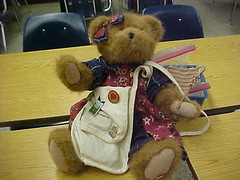
The show on January 16th was titled "Civil War Sallie Technology Projects-Special Guest: Sarah and Jim Beeghley". (The entire session is archived here.) Sarah is a sixth grader from Carlisle, Pennsylvania who started a Educational Follow Me Project. She took her passion - the Civil War- and created Civil War Sallie. Sallie is a teddy bear that travels around to different Civil War battlefields, museums, and classrooms. Sarah, or should I say Sallie, maintains a blog, a wiki, and a Twitter account where she keeps everyone updated about her travels. After attending the session I decided to sign up to get Sallie to visit our classroom.

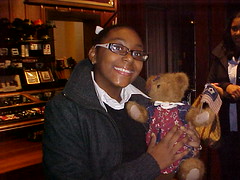
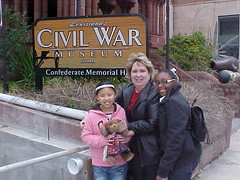
This huge box arrived at school Wednesday morning, January 27. Inside that box was Civil War Sallie and a ton of Civil War information. My students were all excited to meet her and read her accompanying information. They loved checking out all of the pins that she wears or carries in her knapsack. They took turns taking her to their other classes and home at night. On Saturday, February 1, two of my students and their families met me and Civil War Sallie at the Civil War Museum in New Orleans. The museum presented Sallie with a special pin and took photos of all of us to put in their newsletter. Dionne and Sabrina and Sallie had fun taking pictures, learning from the exhibits, and shopping for keepsakes at the gift shop.

MVC-107SMVC-111S

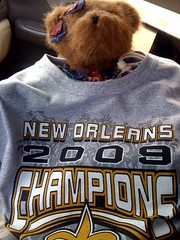
Sallie even became an honorary member of the Who Dat Nation at our school's pep rally where we all cheered for our Saints football team to win the Super Bowl (which they did). Sadly the visit had come to an end, and it was time to send Sallie on to her next stop. She was headed to Mrs. Blazosky's 1st grade classroom in Clarion, Pennsylvania. (I know Tracy Blazosky through my online training with Discovery.) My students and I are glad we had a chance to be a part of this unique educational opportunity. Thank you, Sarah for your inspiring work.

photo (24)

Monday, October 12, 2009

More from Prairie Grove Battlefield


On Sunday afternoon I met with the Sons of Confederate Veterans at Prairie Grove, one of the many groups that meet at the park. Groups like these help the park with projects and events. With their help we are working to preserve heritage and history.


I toured the one mile walking trail with a group of German foreign exchange students and saw where the heaviest fighting occurred during the Battle of Prairie Grove.

We also met with the Master Gardeners, a group of volunteers who help keep the park looking beautiful. The Battlefield Park has many different groups that help tell what happened here on December 7th, 1862.
The Battle of Prairie Grove covered about 2,875 acres of ground with battle formations that stretched over two miles from east to west along the ridge and valley. Today Prairie Grove Battlefield preserves 840 acres including land where some of the heaviest fighting took place.

Thursday, October 8, 2009


Today, October 8th I toured Hindman Hall Visitor Center and Battlefield Museum, with the Rayburn family from Tennessee. I learned about the different types of Artillery that was here during the Battle of Prairie Grove, December 7, 1862.

The Battle of Prairie Grove was the last time two armies of almost equal strength faced each other for control of northwest Arkansas. When the Confederate Army of the Trans-Mississippi withdrew from the bloody ground on the night of December 7th, it was clear Missouri and northwest Arkansas would remain under Federal protection.

Artillery at Battle Prairie Grove
10-pounder Parrot Rifle: US (10): CS (0) - Range: 1900 yards or 1.1 miles
3-inch Ordnance Rifle: US (8): CS (0) - Range: 1850 yards or 1.1 miles
14-pounder James Rifle: US (8): CS (0) - Range: 1850 yards or 1.1 miles
Type 1 James Rifle (6-pounder smoothbores modified with James’ rifling system): US (0): CS (2) -Range: 1700 yards or 1 mile
6-pounder smoothbore gun: US (8): CS (13) - Range: 1523 yards or .8 miles
Confederate 2.25-inch Mountain Rifle: US (0): CS (up to 4) - Range: 1100 yards or .6 miles
12-pounder Field Howitzer: US (8): CS (8) - Range: 1072 yards or .6 miles
12-pounder Mountain Howitzer: US (12): CS (3) - Range: 1005 yards or .6 miles

I enjoyed looking at the Rifled and smoothbore projectiles with Danita the office manager.

Sunday, October 4, 2009

Visiting Jacksonport State Park

Today the part interpreters gave me a run through of the different things that are offered at Jacksonport State Park for visitors. As many of you have noticed through my other blogs, there are several things including the Confederate monument, cannon, and commemorative signs available to look at in the courtyard.

The courthouse has several exhibits covering the whole history of the Jacksonport; however, there are parts of the exhibit that relate specifically to the Civil War. The Courthouse which visitors are able to pay a small admission and go through has a direct connection to the Civil War. This is that even though taxes were levied in 1861 and funds to begin construction of the Courthouse were raised, construction was put on hold until 1869. The courthouse wasn’t completed until December 24, 1872. The reason for this delay was during the Civil War local citizens many of whom were fighting for the Confederacy far from home were without adequate means to live.


Their families in Jacksonport were also going through tough times. The money originally set aside for the construction of the courthouse was actually used to help feed and clothe the volunteers who join the Confederacy and their families.

Besides visiting the courthouse, Confederate monument, and cannon in the courtyard, visitors have other ways to learn about the Civil War history at Jacksonport. The park interpreters offer a variety of regularly scheduled interpretive programs relating to the Civil war. A few of these programs are Weapons of the Civil War, Tools of the Civil War, Flags of the Confederacy, and a Mr. William E. Bevens programs.

The “Weapons of the Civil War” let visitors see and learn about the weapons that were used in the Civil War. Some of these weapons include reproduction 1862 Richmond musket, a Colt 1861 Navy pistol or 1858 Remington Pistol, a Civil War saber, a bayonet, and a Confederate D Guard Bowie Knife. On some occasions, interpreters will not only demonstrate how one fired the guns, but will actually fire them. Hearing the musket fired was really cool, although it did startle me some. Below is a picture with me and some of the weapons discussed during these programs.


The” Tools of the Civil war” program is similar to the weapons program but different because more than just the weapons are discussed during this program The interpreters show and discuss several different items that soldiers used during the Civil War. Some of these items include the uniforms, haversacks, bed rolls, sewing kits, tin mess plates, tin cups, canteens, lanterns, and civil war money just to name a few.
The “Flags of the Confederacy” program shows the different flags used by the Confederacy. The 3 national confederate flags are shown and discussed as well as the Confederate Battle Flag and the Bonnie blue flag. The interpreter, who told me about the Bonnie blue flag, explained that during the Civil War a song was written about the flag to encourage people to join the Confederacy. The song was written by Harry Macarthy. I really enjoyed it, when the interpreter asked us to sing the song with him. It was a lot of fun. The program also explained how the Flags of the Confederacy have influenced some of our state flags as well. Arkansas, Alabama, and Mississippi are just a few of the flags influenced by the Confederate flag. Check out my picture below with the Bonnie Blue flag.


The last program I was told about that the interpreters do here at Jacksonport is the Mr. William E. Bevens. Mr. Bevens as I mention in a past blog was a member of the Jackson Guards who wrote his accounts of the Civil War to help raise money for the Confederate monument that now sits at Jacksonport. A costume interpreter portrays himself as William E. Bevens. He discusses the Civil War from Mr. Bevens reminisces. Although I was not able to see the whole program, the interpreter did give me an example of this program. From what I saw Mr. Bevens was a very interesting person and I really wished I had more time to learn about him.
Overall I really enjoyed my experience here. Seeing the exhibits, monuments, and some of the interpretive programs really made me want to learn more about the Civil War’s affect on Jacksonport Arkansas. It is a shame that I was not able to catch all the programs, but I am excited to know I will be heading to some where new and learn more about the history of the Civil War and the effect it has on our present, and our future. Saying good bye to my friends here at Jacksonport is hard, but I am excited at the possibility of making new friends at other parks.
Farewell to Interpreters Donna Bentley, and Brian Whitson, and all my other friends at Jacksonport State Park.


rwze5b7uxh

Tuesday, September 15, 2009

My First Day at Surratt House Museum!

It was a bumpy journey, but I arrived to Surratt House Museum, late yesterday afternoon. I was so tired, I decided to sleep for the rest of the day. I was definately awake and ready for my first day!! Today, Miss Julie and Miss Susan were cleaning the museum, and I got to help! Cleaning a museum, is much different than cleaning a house. You have to wear cotton gloves, to protect furniture and other artifacts from the oils on our skin. The oils can damage furniture and other objects. We also had to lightly dust the artifacts with a soft cloth. Each individual piece had to carefully be taken off of a shelf or table and set on the cleaning table, where we would dust off the artifact. It was very time consuming but worth it! I was very glad that they allowed me to take part in such a responsiblity!

After we cleaned, we took a break, and I watched everyone do office work. I am very excited for this week. Tomorrow, I will officially become a Surratt House Museum Volunteer, and I get to give tours with Miss Julie! And on Saturday, I will be going on the John Wilkes Booth Escape Route Tour! People come from miles around to take this tour, and I am one of them!!
Sallie

Thursday, August 20, 2009

I've had another busy day at the Clara Barton Birthplace Museum in North Oxford, MA.


Clara Barton became famous during the Civil War by collecting supplies for the soldiers and nursing wounded men on the battlefield. After the war was over, Clara opened a Missing Soldiers Office to help families find missing loved ones. During the war, many soldiers were buried in unmarked graves. Clara helped families find missing soldiers by publishing lists of the missing men. The photo below shows me looking at one of Clara's lists of missing men in the museum.


Clara Barton also founded the American Red Cross in 1881. Clara responded to many natural disasters in America during her 23 years as President of the American Red Cross. She delivered relief supplies to victims of Mississippi River floods in the 1880s and to the people of Galveston, Texas after a hurricane in 1900. Clara also provided relief and medical care to American soldiers in Cuba during the Spanish-American War.


Clara Barton was a very busy woman who continued to help others well into her 80s. Just reading about all of Miss Barton's accomplishments makes me tired.


I will tell you about Clara's hometown of Oxford, MA tomorrow.

Tuesday, June 23, 2009

Treasures at Tredegar


What a view! After quite a journey, I arrived safe and sound in Richmond, Virginia. My hosts at the American Civil War Center at Historic Tredegar let me take a nap to refresh myself before I began to learn about this unique historic site. This photo shows me with Jenny Didas, my host and personal tour guide and educator. We're standing along the James River in downtown Richmond, just across the street from the Center! You can feel the river breezes as you walk along the Center grounds . . .it's a great way to cool down from the southern heat and humidity! Be sure to visit my blog this week to learn more about my visit and about the American Civil War Center! Or, click here to see more photos of my visit in Richmond.

Tuesday, February 17, 2009

National Civil War Museum Part 2

Hello Again,

In my first post, I showed you some of the photos from my recent trip to the National Civil War Museum in Harrisburg. Today I would like to show you some more photos and tell you more about what I learned.


This is the bible that was owned by Confederate General Robert. E. Lee

This is a piece of wallpaper from the Peterson House in Washington, DC. After President Lincoln was shot at Ford's Theater, he was carried across the street to the home of William Peterson.


This is a medical display at the musuem. The surgeon is getting ready to cut off the leg of the wounded soldier on the table while another soldier tries to hold him down. He is biting on a piece of rope to help with the pain.


As part of the events that day, the Victorian Dance Ensemble displayed some Civil War era dancing. You can read more about Civil War Dancing in this post.


Finally, outside of the museum is a monument showing Sgt. Kirkland giving water to a wounded soldier at the Battle of Fredericksburg. This brave confederate soldier risked his life to give water to wounded soldiers from both the north and the south. For this he earned the nickname, "The Angel of Marye's Heights"

If you are in the Harrisburg area, be sure to stop by the Civil War Museum. You can see more photos from the museum on my Flickr page.


Sallie

Monday, February 16, 2009

National Civil War Museum Part 1

Hello,

Yesterday, I went to the National Civil War Museum in Harrisburg, PA. I enjoyed learning about the Civil War. I also got meet President Lincoln and have my picture taken with him. I even remembered to wish him a happy 200

Me with President Lincoln


I enjoyed going through the gallery and looking at the different artifacts about the Civil War. They had displays on slavery, medicine, music, artillery, the role of women in the war and lots uniforms and equipment the soldiers would have worn. In the gallery, they also talked about the Camp Curtain that was located in Harrisburg, Pa. Camp Curtain was a Union training camp during the Civil War.

Here are some photos from my visit:


Here I am looking at a diorama of battle of Antietam, this is Burnside's Bridge


Some of the cooking utinsils solders would have used


Did you know that soldiers played marbles, chess and dominos?


Here is a photo of some drums and a bugle. Soldiers played music both in camp and while marching to help regulate their day and to pass the time.


In part two of my visit to the Civil War museum I will show you more photos of what I saw and learned.


Sallie Ann